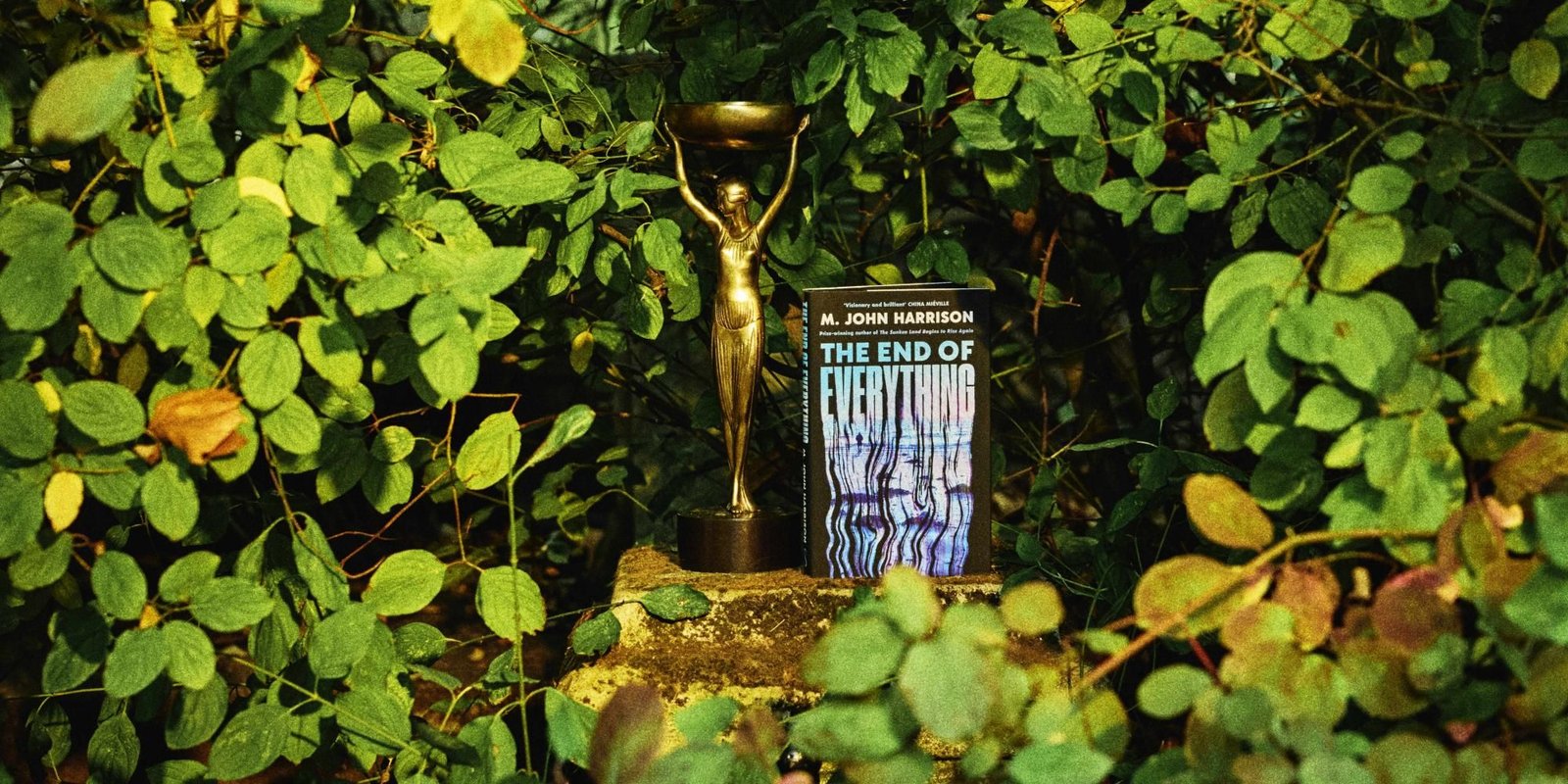
At 81, the British novelist makes literary history with The End of Everything, becoming the oldest recipient of the prestigious Booker Prize and the first laureate to emerge from the established science-fiction tradition.
In a remarkable moment for contemporary literature, British novelist M. John Harrison has secured a place in Booker Prize history with a distinction that is unprecedented on two counts. At 81, he has become the oldest recipient of the prestigious literary honour, while also emerging as the first Booker laureate from the established science-fiction world. His winning novel, The End of Everything, is a compelling testament to a six-decade literary journey defined by experimentation, intellectual curiosity and an enduring refusal to be confined by genre.
The announcement was made on November 9 at a ceremony at Old Billingsgate in London, where Harrison received the £50,000 prize and the iconic Booker trophy. The jury, chaired by celebrated classicist and broadcaster Mary Beard, unanimously selected his 13th novel from a shortlist of six titles, following consideration of 163 submissions.
Harrison's achievement surpasses the previous age record held by Margaret Atwood, who was 79 when she jointly won the Booker Prize in 2019 for The Testaments. Yet the significance of his victory extends well beyond this remarkable milestone. It brings a literary tradition that has often existed at the periphery of mainstream literary recognition into the very heart of one of the world's most celebrated fiction awards.
A World on the Edge of the Incomprehensible
Published by independent imprint Serpent's Tail, The End of Everything is a dystopian satire set along the Kent coast of a near-future Britain, some years after an unexplained catastrophe has transformed the social and political landscape.
At its centre are Phillip Tennent, a beachcomber who makes his living collecting objects washed ashore from the English Channel, and his elderly aunt Marnie. Together, they attempt to negotiate an increasingly disordered existence in a society where institutions have weakened, social conventions have eroded and the familiar boundaries of everyday life have become uncertain.
Their precarious world is further unsettled by the mysterious arrival of shapeshifting entities known as the iGhetti. When Phillip discovers an unusual object on the beach, an encounter with the inexplicable draws him into a reality where even the most fundamental assumptions about human existence are called into question.
What distinguishes Harrison's novel from conventional post-apocalyptic fiction is its refusal to treat catastrophe as a spectacle. Instead, he turns his attention to the quieter, more unsettling consequences of societal collapse: the persistence of routine, the fragility of human relationships and the instinct to find meaning when the established frameworks of understanding have ceased to function.
Written in short, cinematic chapters, the novel combines dark humour, surreal imagery and an understated sense of foreboding. At just 198 pages, it was the shortest work on this year's shortlist. Its compact form, however, carries an expansive intellectual ambition, inviting readers to confront the limits of their own understanding.
The Politics of the Present, Imagined through the Future
Explaining the jury's decision, Mary Beard described the novel as 'the politics of now seen through the lens of the future'. She observed that it unsettles expectations, provokes a wry smile and, despite its disturbing subject matter, leaves readers with an unexpected trace of optimism.
The jury's response reflects the novel's remarkable ability to transform a speculative premise into a meditation on contemporary anxieties. Its imagined catastrophe is less an escape from reality than a means of examining the uncertainties already embedded within it.
Harrison has acknowledged that contemporary affairs provided the novel's thematic foundation. Reflecting on its inspiration, he remarked: 'Current affairs provided the themes and the satire: what happens when all of our expectations and explanations of the world become an ongoing disaster, but we still have to make a life?'
The question lies at the heart of the book. How does one continue to live, create relationships and preserve a sense of normality when the world no longer offers familiar assurances? Harrison approaches this dilemma not through grand declarations, but through fragments of ordinary existence, moments of absurdity and encounters that resist easy interpretation.
The result is a novel that speaks to the present precisely because it refuses to offer straightforward answers about the future.
Six decades of an Uncompromising Literary Vision
Harrison's Booker triumph is the culmination of a writing career that began in 1965, when he sold his first short story. In 1969, he joined the staff of the influential British speculative-fiction magazine New Worlds, where he edited its book pages until 1978. Over the decades, he developed a distinctive literary identity that traversed science fiction, fantasy, experimental writing and literary realism.
His fiction is characterized by its precision of language, atmospheric intensity and resistance to conventional narrative structures. Rather than treating science fiction merely as a vehicle for imagined technologies or alternative worlds, Harrison has consistently used its possibilities to investigate human consciousness, social structures and the uncertainties of existence.
His notable works include Climbers (1989), which received the Boardman Tasker Prize for Mountain Literature; The Course of the Heart (1992); Light (2002); and Nova Swing (2006), which won the Arthur C. Clarke Award in 2007. His 2020 novel The Sunken Land Begins to Rise Again received the Goldsmiths Prize for innovation in fiction.
He has also established himself as an accomplished short-story writer and literary critic. His body of work includes five short-story collections and an 'anti-memoir', Wish I Was Here, published in 2023.
Interestingly, Harrison's relationship with the Booker Prize predates his victory. He served as a member of the judging panel in 2022, making his return to the ceremony four years later as its laureate an especially striking chapter in his literary journey.
Science fiction claims its place in literary history
Perhaps the most far-reaching aspect of Harrison's victory is the recognition it brings to science fiction as a serious literary tradition.
While several previous Booker laureates have incorporated speculative elements into their fiction, Harrison is the first winner to have emerged from the established science-fiction community. His achievement challenges the long-standing distinctions between literary and genre fiction, reaffirming that imaginative world-building and intellectual depth are not mutually exclusive.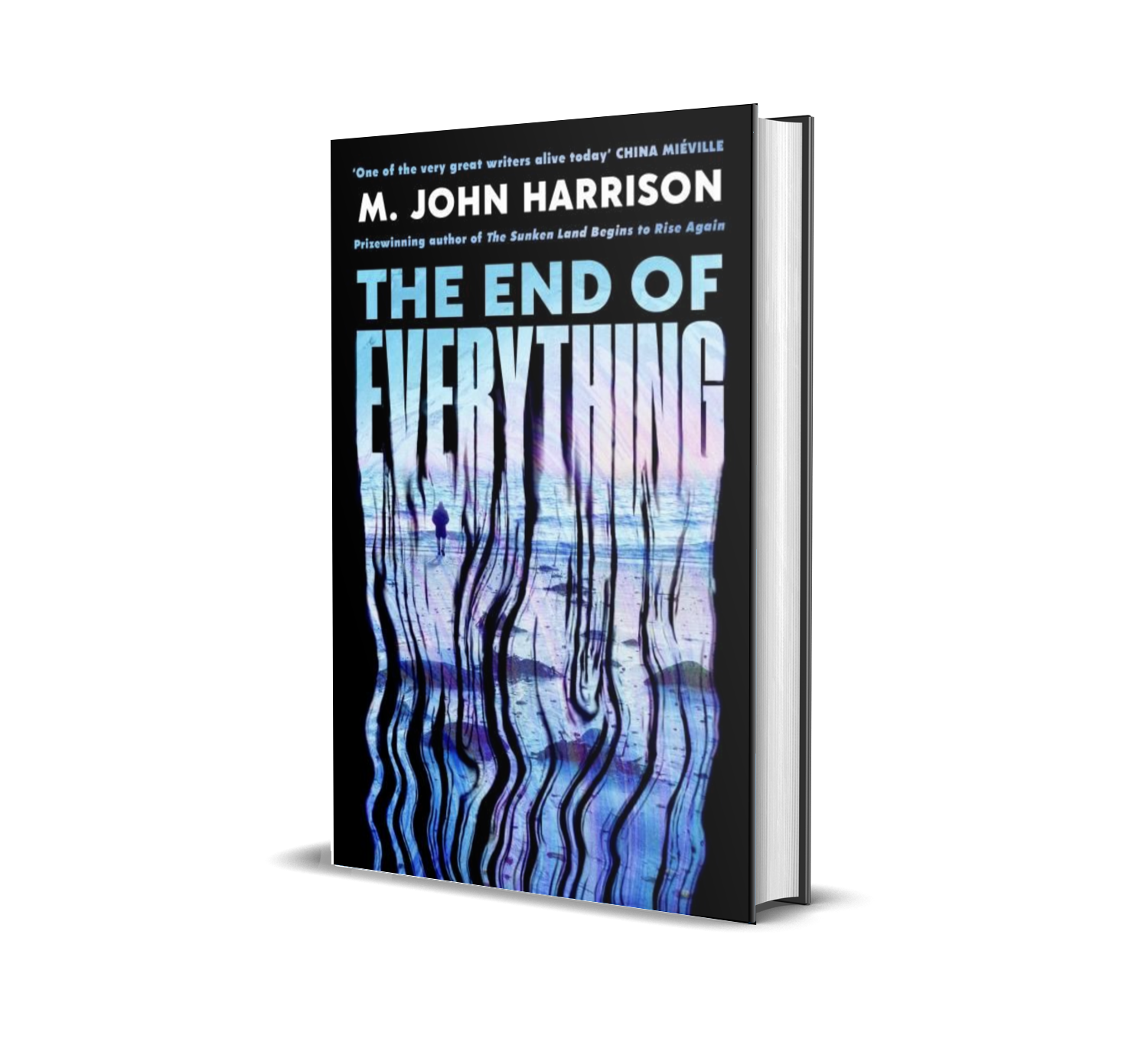
Gaby Wood, Chief Executive of the Booker Prize Foundation, described Harrison as a genuinely original thinker and a genre-defying writer who takes ideas seriously. She observed that his understanding of the novel form is evident even in the ways he deliberately breaks its conventions.
Her assessment captures the essence of Harrison's literary contribution. His fiction does not simply inhabit established genres; it interrogates their possibilities, stretches their boundaries and discovers new ways of engaging with familiar human concerns.
The award also marks the first Booker Prize victory for Serpent's Tail, an independent imprint of Profile Books. The achievement is an important endorsement of independent publishing and its continuing role in bringing unconventional literary voices to a wider readership.
A victory beyond age and convention
At 81, M. John Harrison's historic double distinction carries a significance that extends beyond the familiar narrative of a celebrated author finally receiving his due. It is an affirmation of literary perseverance, creative independence and the enduring value of a writer's willingness to explore unfamiliar territory.
For six decades, Harrison has pursued a literary vision that resists easy classification. His Booker-winning novel brings that vision to an extraordinary culmination, demonstrating that fiction can transcend the boundaries of genre while remaining deeply engaged with the realities of its time.
There is a certain symmetry in the recognition: a writer who has spent a lifetime questioning literary conventions has received one of the world's most prestigious literary honours for a work that refuses to be defined by them.
With The End of Everything, Harrison has not merely rewritten the record books. He has opened a new chapter in the relationship between science fiction and mainstream literature, reminding readers that the boundaries of literary imagination are, perhaps, meant to be crossed.


