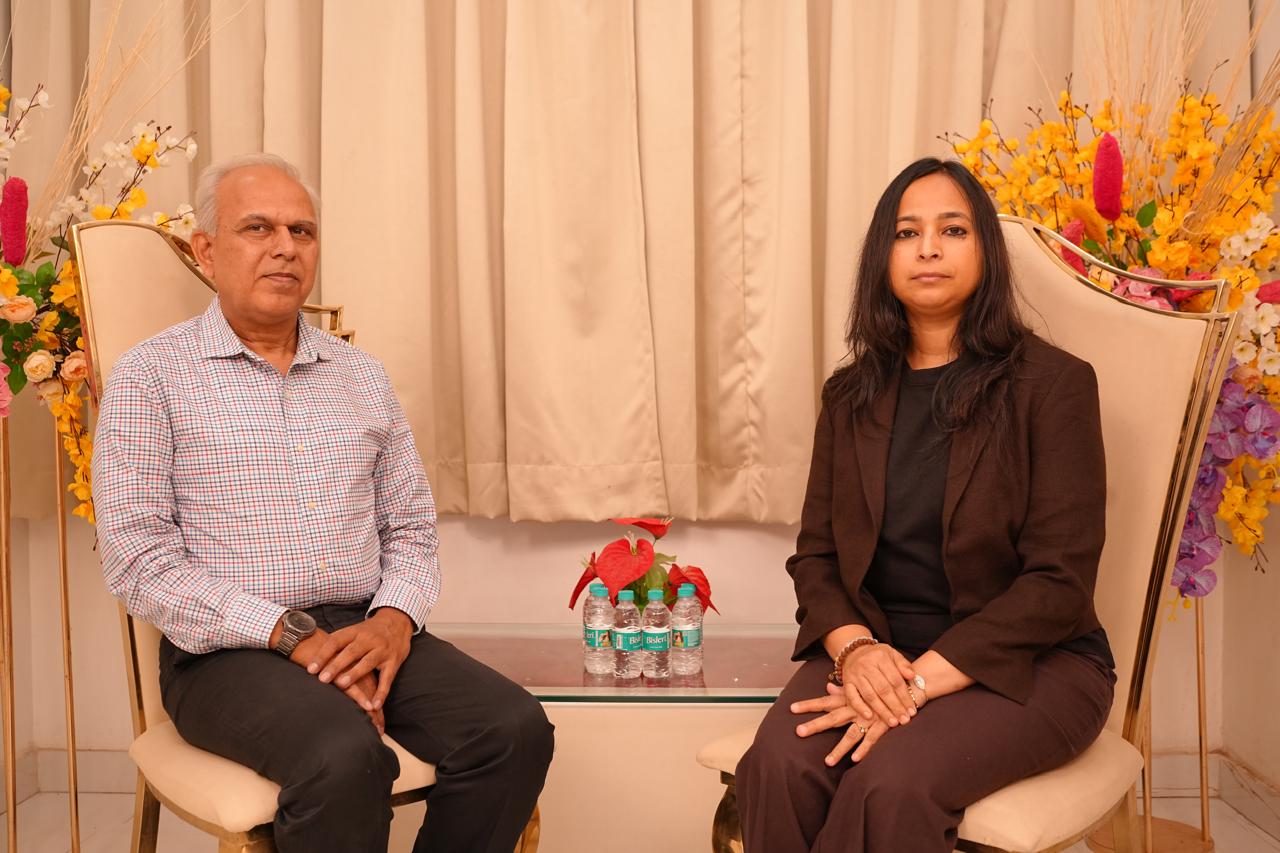
In the latest edition of Between Perspectives, Wing Commander (Retd.) Umendra Tripathi in an insightful conversation with host Jyoti Jha; Award-Winning Bestselling Author, Columnist & TEDx Speaker explores themes of leadership, social service, and the importance of empathy and awareness.
Reflecting on his distinguished military career, Wing Commander Tripathi emphasizes that the most valuable lessons he carried forward were not the medals, accolades, or missions he accomplished, but the principles of discipline, teamwork, and trust. Leadership, he explains, is not about authority alone; it is about building meaningful relationships with people, understanding their strengths and concerns, and fostering confidence during challenging situations. According to him, a leader’s success lies in their ability to inspire and connect with those around them, particularly in high-pressure environments where trust becomes the foundation of collective success.
The conversation then shifts to his life after retirement and his involvement with the transformative social initiative Let's Inspire Bihar. While many view retirement as a time to slow down, for Wing Commander Tripathi it marked the beginning of a new chapter of service. He shares how the desire to contribute to society had always been a part of his identity, but retirement provided the opportunity to channel that aspiration into meaningful action. Through community engagement and awareness-driven initiatives, he continues to work toward social development and positive change, particularly in Bihar.
One of the most compelling segments of the discussion explores the power of language and its influence on societal attitudes. Wing Commander Tripathi highlights how words shape perceptions and often determine how individuals and communities are viewed. He cites the evolution of terminology from labels such as “disabled” to “differently-abled” as an example of how language can foster dignity and respect. Such shifts, he argues, are not merely semantic changes but important steps toward creating a more inclusive and compassionate society. By consciously choosing respectful language, individuals can contribute to changing mindsets and challenging long-standing prejudices.
The role of literature in driving social transformation is another key theme of the conversation. Wing Commander Tripathi underscores the immense responsibility that writers, storytellers, and content creators hold in shaping public consciousness. Literature has the power to challenge stereotypes, spark meaningful conversations, and inspire action. He believes that impactful writing should be accessible to people from all walks of life and presented in diverse formats to reach wider audiences. In an age where information is consumed rapidly, the ability of literature to influence thought and encourage reflection remains as significant as ever.
The discussion also delves into the important subject of autism and societal inclusion. Wing Commander Tripathi advocates for moving beyond the traditional medicalized understanding of autism as a condition defined by deficits. Instead, he encourages embracing the concept of neurodiversity, which recognizes and values the different ways individuals think, learn, and interact with the world. He stresses that people on the autism spectrum possess unique strengths and talents that deserve recognition and support. More importantly, he calls upon families, educators, and society at large to move from merely tolerating differences to genuinely accepting and celebrating them.
As the conversation draws to a close, Wing Commander Tripathi shares an inspiring message for young people. He encourages the youth to look beyond personal ambitions and become active participants in solving societal challenges. By observing their surroundings, identifying pressing issues, and working collectively toward practical solutions, young citizens can become catalysts for meaningful change. He believes that empathy, awareness, and a sense of responsibility are essential qualities for building a better future.
Rich in wisdom, experience, and optimism, this insightful conversation serves as a powerful reminder that true leadership extends beyond professional achievements. Whether through service, literature, advocacy, or social action, every individual has the potential to contribute to a more inclusive, compassionate, and progressive society.


