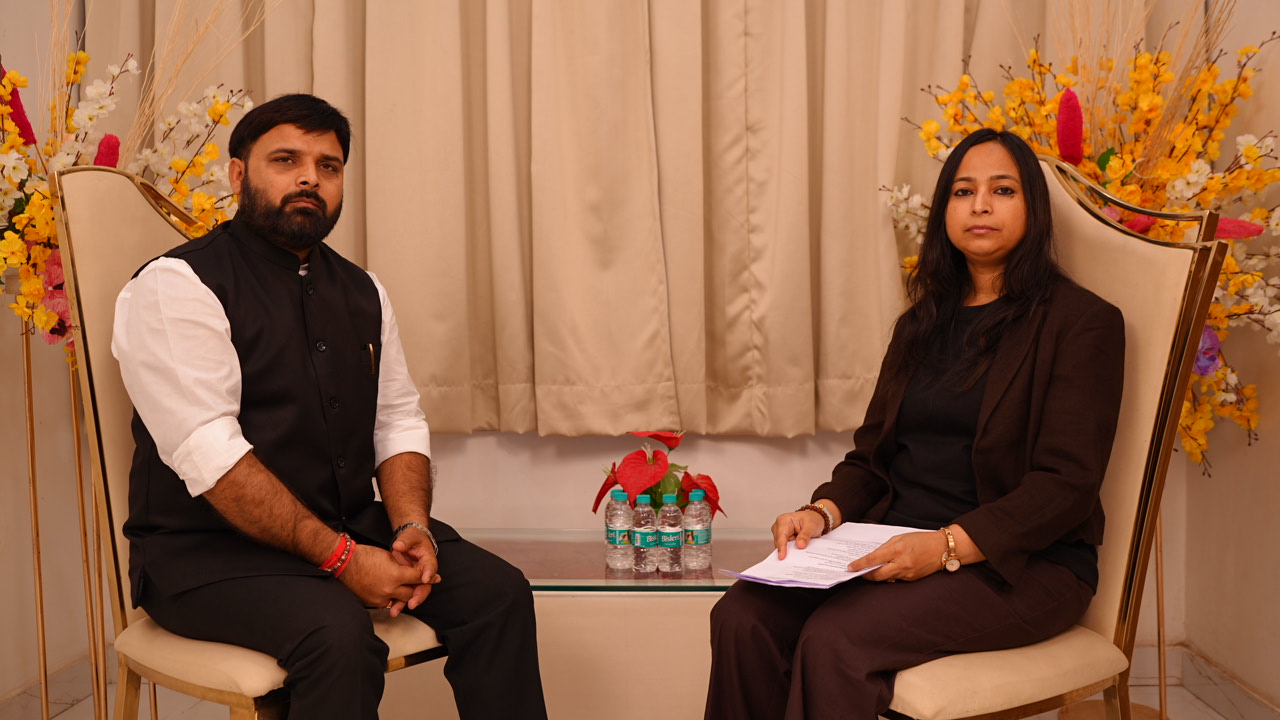
In this edition of Between Perspectives, Kishlay Kishor, a social reformer, author, and National Youth Icon Awardee in conversation with the Host, Jyoti Jha; Award-Winning Bestselling Author, Columnist & TEDx Speaker centers on the intersection of social activism and literature, with a focus on inspiring change and personal development.
In a thought-provoking conversation, Kishlay Kishor offered valuable insights into his journey of balancing grassroots activism with literary expression. Known for his deep involvement in social development initiatives, Kishlay explained that despite his growing recognition as an author, he continues to identify himself first and foremost as a social worker. For him, writing is not separate from social service; rather, it is an extension of his experiences, observations, and interactions with people at the grassroots level.
Drawing from more than twelve years of fieldwork, Kishlay shared how his social engagement has provided him with a unique understanding of society, human aspirations, and the challenges faced by communities. These experiences have become the foundation of his writing. Instead of producing complex academic narratives, he aims to present stories and lessons in a simple, accessible, and motivational manner so that readers from diverse backgrounds can connect with them. According to him, literature becomes meaningful when it inspires reflection and encourages positive action.
The discussion also explored his literary journey and the books that have emerged from his social experiences. One of his notable works, IPS Vikas Vaibhav: The Man Beyond the Barriers, chronicles the life, vision, and leadership of IPS officer Vikas Vaibhav. The book highlights the philosophy behind the Let's Inspire Bihar movement and its efforts to create meaningful social transformation in the state. Through this work, Kishlay seeks to document stories of leadership and public service that can motivate citizens, especially young people, to contribute toward nation-building.
He also introduced his upcoming motivational book, Utkarsh Path, which focuses on personal growth and self-development. The book examines the journey of an individual from being merely a person to becoming a distinctive personality with purpose, values, and influence. Kishlay believes that every individual possesses unique potential, and the key lies in identifying and nurturing that potential through continuous learning, discipline, and service.
A major part of the conversation revolved around the Let's Inspire Bihar initiative, a movement that has gained significant attention for its efforts to promote development through education, healthcare, and community participation. Kishlay discussed the importance of empowering citizens to become active stakeholders in the progress of their region. He emphasized that sustainable development cannot be achieved solely through government efforts; it requires collective participation from individuals, institutions, and communities.
The role of entrepreneurship and innovation also featured prominently in the discussion. Kishlay highlighted the growing significance of startup summits and entrepreneurial platforms in creating opportunities for young people. He believes that Bihar possesses immense talent and potential, and initiatives that encourage innovation, skill development, and enterprise can play a crucial role in shaping the state's future.
When asked about his definition of success, Kishlay offered a perspective that differed from conventional measures of achievement. For him, success is not determined by wealth, status, or public recognition. Instead, it is rooted in self-satisfaction, personal integrity, and the positive impact one creates in the lives of others. He stressed that true fulfillment comes from contributing meaningfully to society and remaining aligned with one's values.
The conversation also touched upon the subject of women's empowerment. Kishlay underscored the indispensable role women play in every sphere of life and argued that genuine equality can only be achieved when men actively support, respect, and encourage the women in their families and communities. He maintained that empowerment is not merely a social objective but a collective responsibility.
Given the series' broader focus on autism awareness and social inclusion, Kishlay also reflected on author Jyoti Jha's work on autism. He praised her efforts in simplifying a complex and often misunderstood subject, making it accessible to a wider audience. Such initiatives, he noted, are essential for fostering awareness, empathy, and acceptance within society.
To conclude the conversation, Kishlay delivered an inspiring message to young people. He encouraged them to remain humble, embrace authenticity, and resist the temptation to imitate others. Instead, he advised them to focus on understanding their own strengths, working within their capacities, and pursuing meaningful goals with dedication and perseverance. According to him, lasting change is created not through imitation but through individuality, sincerity, and consistent effort toward the greater good.


